


Rank Category: $500-$1000 Refractors

The XLT 120’s optical tube is a chunky 13 pounds, and it’s about 1 meter long. This scope is pushing the limits of the included solidly made, high-quality CG-4 mount somewhat, but it works well.
With a focal ratio of f/8.33, there is a moderate amount of chromatic aberration, but it’s not a show-stopper for planetary and lunar viewing altogether. You’ll also want to shop for at least a few additional eyepieces for this telescope to get the most it has to offer.
The Omni XLT 120 is a bit awkward to move around and complicated to assemble, but a 120mm with an equatorial mount that can be motorized later on might be more appealing to you.


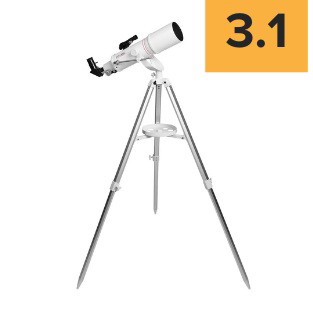
With a focal ratio of f/9.8, chromatic aberration is really only present on the Moon, Jupiter, Venus, and stars of first magnitude or brighter, and it doesn’t significantly affect sharpness. Deep-sky views are very high in contrast with pinpoint stars.
The Twilight I mount is an extremely high-quality mount and the FirstLight 102 is about the largest refractor telescope we can mount on it without vibration problems (Explore Scientific sells a 127mm on the same mount, but we do not recommend it).
The only downside to this scope is the accessories.
Category: Above $1000 Refractors
Unfortunately, there are no all-in-one telescopes on this list that we can say with confidence are capable of serious deep-sky astrophotography right out of the box. Buying a separate optical tube and mount might be a better option if you are looking for a high-quality imaging refractor telescope.
Rank Category: Imaging Refractors
We have a separate ranking page for optical tube assemblies (OTAs), which also includes refractors—these are geared more toward imaging, unlike the visual-focused refractors listed above.